
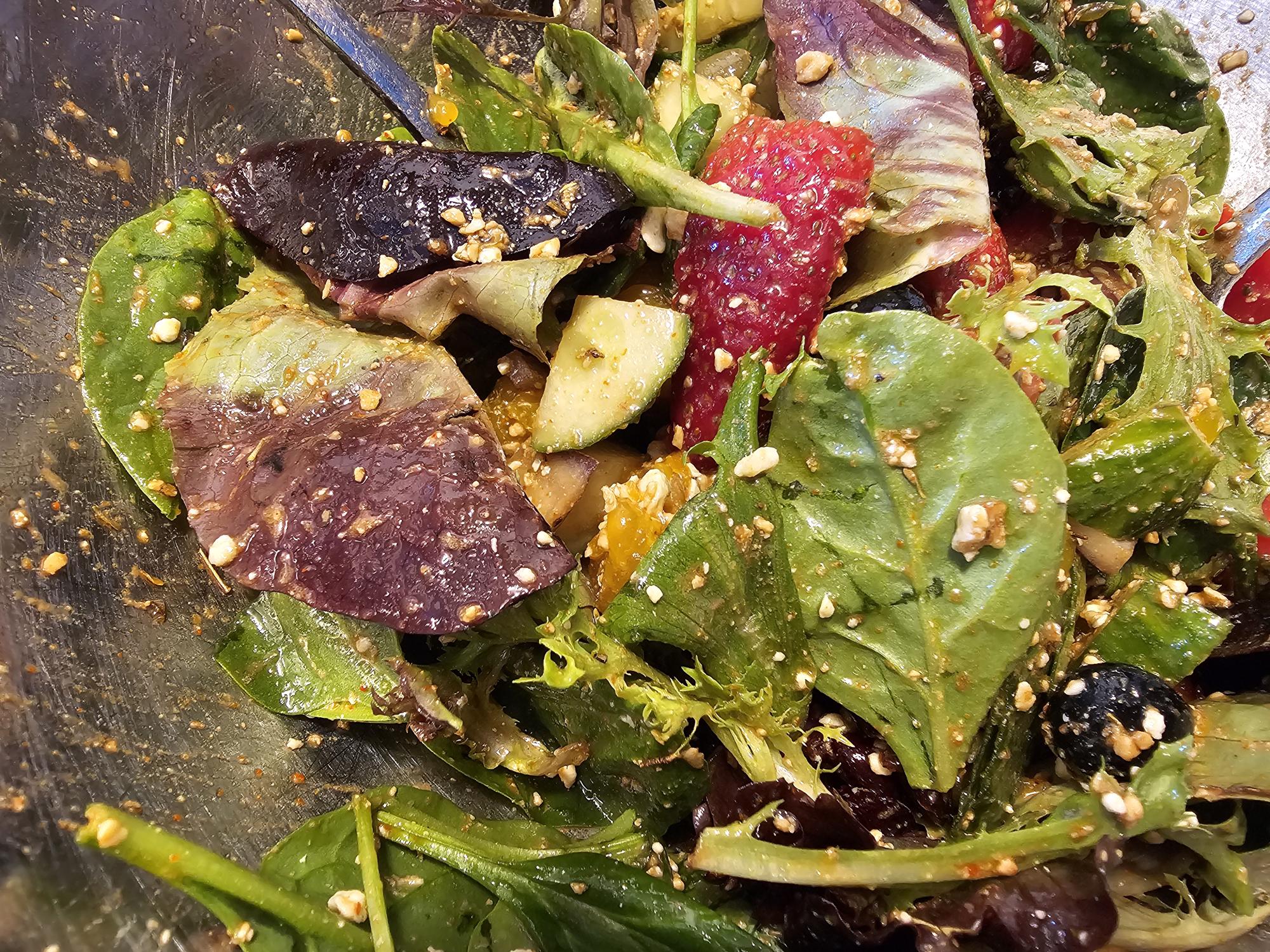
This salad is great to serve on its own or as a side dish. It is loaded with fresh fruit and vegetables which add a hint of sweetness that compliments the tangy flavor of the feta cheese, dressing, and the bitterness of the mixed greens.
Ingredients for the salad:
- 2 cups of mixed salad greens
- 1/4 cup sliced strawberries
- 1/4 cup of blueberries
- 1 clementine, peeled and divided into segments (or 1 mandarin orange fruit cup)
- 1/2 an English cucumber, sliced into bite sized pieces
- 1/4 cup of cherry tomatoes, halved
- 1/8 cup pumpkin seeds
- 1/8 cup dried, sweetened cranberries
- 1/4 cup red onion, thinly sliced
Ingredients for the salad dressing:
- 2 tablespoons olive oil
- 3 cloves garlic, minced
- 1 teaspoon dried oregano
- 1 teaspoon dried thyme
- 1 teaspoon paprika
- 2 tablespoons of balsamic vinegar
- 1/4 cup crumbled feta cheese
- Salt and black pepper to taste
Directions for the salad:
- Wash and dry all the fruits and vegetables and place in a large bowl.
- Add the remainder of the ingredients and toss with the salad dressing recipe (instructions below).
Directions for the salad dressing:
- Mix all ingredients together in a small bowl.
- Store in an airtight container in the fridge for up to a week.
Guidelines for storing homemade salad dressing:
Homemade salad dressing can vary in terms of ingredients, but in general, it can last for about one to two weeks when stored properly in the refrigerator. Here are some guidelines for storing homemade salad dressing:
- Check Ingredients: The shelf life of your homemade salad dressing may depend on the ingredients you use. Ingredients like fresh herbs, garlic, and dairy (e.g., yogurt or buttermilk) can shorten the dressing’s shelf life. Vinegar-based dressings tend to last longer than those with dairy or fresh herbs.
- Use a Clean Container: Store your homemade dressing in a clean, airtight container, such as a glass jar or a plastic squeeze bottle. Make sure the container is thoroughly cleaned and dried before pouring the dressing in.
- Seal Tightly: Ensure that the container is sealed tightly to prevent air from getting in. Oxygen can promote the growth of bacteria and cause the dressing to spoil more quickly.
- Refrigeration: Store the salad dressing in the refrigerator, preferably towards the back where temperatures are more consistent. Cold temperatures slow down bacterial growth and help preserve the dressing.
- Check for Signs of Spoilage: Before using the dressing, always check for any signs of spoilage, such as an off smell, mold growth, or unusual texture. If you notice any of these signs, it’s best to discard the dressing.
- Separation: It’s common for homemade salad dressings to separate over time. Simply shake or whisk the dressing to recombine the ingredients before using it.
If your homemade salad dressing has been stored properly and shows no signs of spoilage, it should be safe to use for up to two weeks. However, the flavor and quality of the dressing may begin to deteriorate after the first week. If you’re unsure about the freshness of your dressing, it’s better to err on the side of caution and make a fresh batch when needed.