
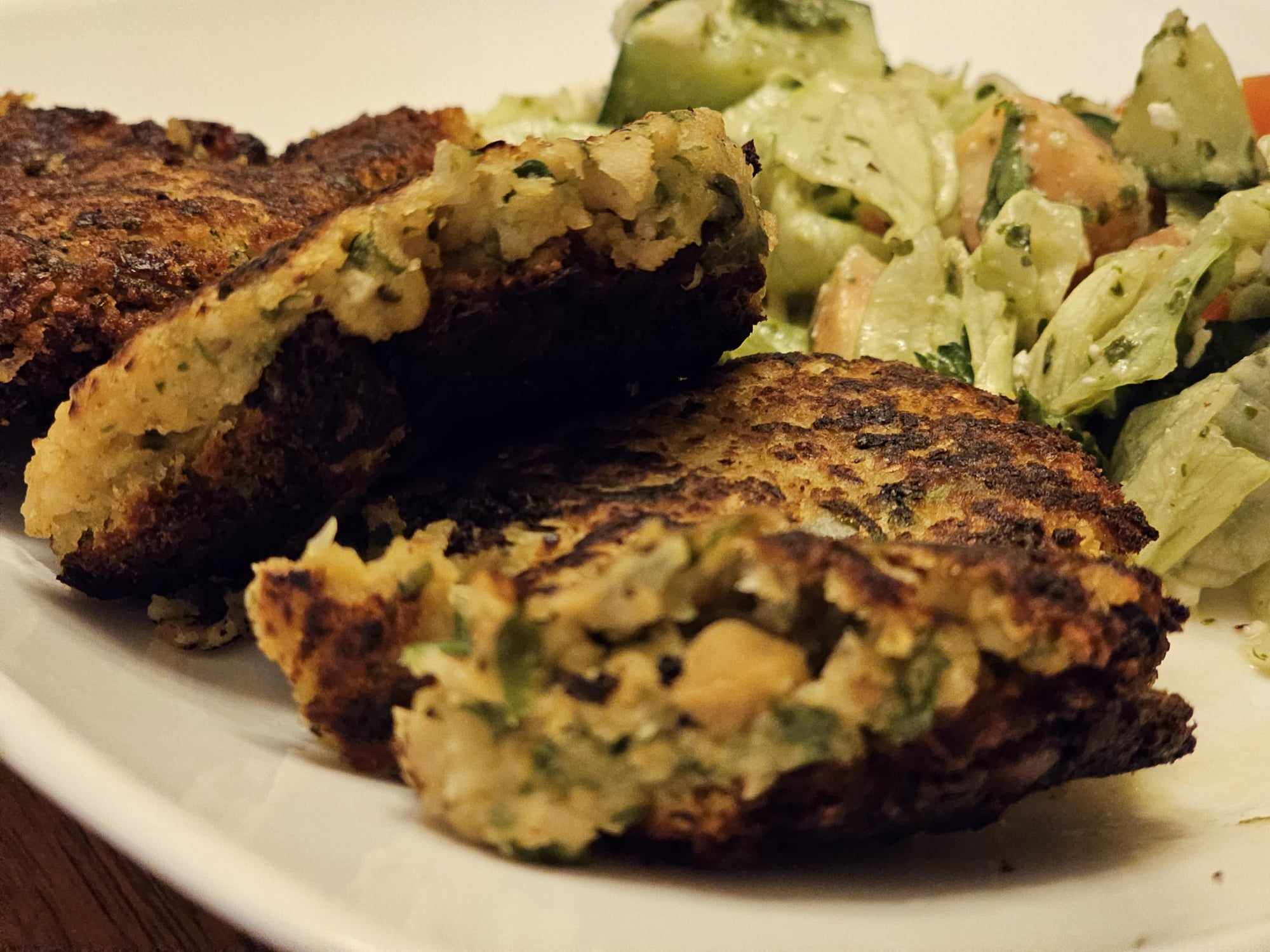
The falafel is known for its affordability, versatility, and the ability to be enjoyed in various ways – stuffed into pita bread, served with salads, or as a protein-rich component of a larger meal.
While the exact origin story may be difficult to trace, it’s clear that falafel has deep roots in the Middle Eastern region and has since spread in popularity across the world, becoming a beloved street food and restaurant dish in many cultures.
An authentic falafel should have a crisp and crunchy exterior while maintaining a tender and moist interior. The exterior is achieved through frying or baking until it becomes golden brown and develops a slightly crispy texture. This crunchiness adds a delightful contrast to the soft and flavorful interior.
The interior texture of an authentic falafel is typically smooth and creamy, with a consistency that’s cooked through but not dry. When you bite into a well-prepared falafel, the inside should be soft and moist, with a cohesive yet crumbly texture.
The combination of the crispy outer layer and the moist, flavorful interior is what makes falafel so beloved. It’s this balance of textures that contributes to the overall enjoyment of this classic Middle Eastern dish.
Authentic falafel also uses dried chickpeas, soaked overnight for 12 hours, and then ground into a course meal. The recipe I am providing you with is a “shortcut” falafel recipe that uses canned chickpeas, but the result was delicious.
Gluten Free Falafel Recipe
Ingredients:
For the falafel mixture:
- 2 cups canned chickpeas, drained and rinsed
- 1/2 cup fresh parsley, chopped
- 1/4 cup fresh cilantro, chopped
- 1/2 onion, chopped
- 3 cloves garlic, minced
- 1 teaspoon ground cumin
- 1 teaspoon ground coriander
- 1/4 teaspoon cayenne pepper (adjust to taste)
- 1 teaspoon salt (adjust to taste)
- 1/2 teaspoon black pepper
- 2 tablespoons chickpea flour (or other gluten free flour of your choice)
- 1 teaspoon baking powder
- Juice of 1 lemon
- 2 tablespoons olive oil
For frying:
- High-heat cooking oil (such as sunflower or grapeseed oil)
Instructions:
- In a food processor, combine the cooked chickpeas, parsley, cilantro, chopped onion, minced garlic, ground cumin, ground coriander, cayenne pepper, salt, and black pepper. Pulse until the mixture is well combined but still slightly chunky.
- Transfer the mixture to a bowl and add the chickpea flour and baking powder. Mix well.
- Add the lemon juice and olive oil to the mixture, and stir until everything is evenly incorporated.
- Cover the bowl with plastic wrap and refrigerate for about 1 hour. Chilling the mixture will make it easier to handle and shape the falafel.
- After chilling, preheat the oil in a deep skillet or pot to 350°F (175°C).
- While the oil is heating, shape the falafel mixture into small balls or patties using your hands or a falafel scoop.
- Carefully place the falafel into the hot oil, making sure not to overcrowd the pan. Fry for about 3-4 minutes per side, or until they are golden brown and crispy. You can fry in batches if needed.
- Once cooked, use a slotted spoon to transfer the falafel to a plate lined with paper towels to drain any excess oil.
- Serve the gluten free falafel warm with your choice of gluten free pita bread, lettuce wraps, or on a salad. You can also serve them with a side of hummus, tahini sauce, and chopped vegetables.
Enjoy your homemade gluten free falafel!
Remember, cooking times might vary based on the size of your falafel and the specific oil you’re using, so keep an eye on them while frying.
Frequently Asked Questions (FAQs)
1. Can I use canned chickpeas instead of cooking them myself? Absolutely! Canned chickpeas work well and save time. Just make sure to drain and rinse them thoroughly before using.
2. What’s the purpose of chilling the falafel mixture? Chilling the mixture for about 1 hour helps it firm up, making it easier to shape the falafel into balls or patties before frying.
3. Can I bake the falafel instead of frying them? Yes, you can! Preheat your oven to 375°F (190°C), lightly oil a baking sheet, place the shaped falafel on it, and brush the tops with oil. Bake for about 20-25 minutes, flipping halfway through for even cooking.
4. What gluten free flour can I use for the recipe? You can use chickpea flour (also known as gram flour), almond flour, or a gluten free all-purpose flour blend as alternatives.
5. How can I prevent the falafel from falling apart during frying? Make sure the mixture isn’t too wet; excess moisture can cause the falafel to break. Adjust the flour and oil proportions if needed.
Tips and Tricks
- Perfect Texture: Pulse the chickpea mixture until it’s well combined but still slightly chunky. This texture adds a pleasant crunch to your falafel.
- Uniform Sizing: Use an ice cream scoop or your hands to shape falafel into evenly sized balls or patties. This ensures even cooking and a professional presentation.
- Hot Oil Matters: Ensure the oil is at the right temperature (around 350°F or 175°C) before frying. Too hot, and the outside might burn before the inside cooks; too cool, and the falafel can become greasy.
- Frying Techniques: Gently slide the falafel into the hot oil to prevent splattering. Avoid overcrowding the pan, as it can lower the oil temperature.
- Baking Option: If you prefer a healthier version, consider baking the falafel. Place them on a well-oiled baking sheet and brush the tops with oil before baking.
- Air Fryer Option: To make your falafel even healthier, consider using an air fryer. Preheat your air fryer to 375°F (190°C). Lightly brush the falafel with oil to help achieve a golden, crispy exterior. Place the falafel in a single layer in the air fryer basket, leaving some space between them for air circulation. Cook for about 12-15 minutes, turning them halfway through, until they’re evenly browned and crispy on the outside. Cooking times may vary based on the size of your falafel and the specific air fryer model.
- Accompaniments: Serve falafel with a variety of gluten free options like lettuce wraps, rice, quinoa, or as part of a salad.
- Storing: Leftover uncooked falafel mixture can be refrigerated for a day or frozen for later use. Cooked falafel can also be frozen and reheated in the oven.
- Experiment with Spices: Feel free to personalize the spice blend with your favorite herbs and spices to suit your taste.
By following these FAQs and tips, you’ll be well-equipped to create gluten free falafel that’s delicious and perfectly crispy. Don’t hesitate to get creative and adapt the recipe to your preferences. Enjoy your culinary adventure!